I honestly cannot tell you the difference between the intended goal of SSRIs and antipsycotics when looking at how the drugs work. If you listen to psychiatry you would think Abilify treats big scary schizophrenia and a SSRI treats depression and anxiety.
What if I told you an antipsychotic is a stronger version of a SSRI? You probably are thinking no... what? When we dive into how the drugs work, aside for sedation. They are kind of the same thing.
When people take a SSRI, often they find them stimulating. The truth is the nervous system function is stimulated and suppressed at the same time. Don't believe me? Here is lab tested results. “−26.03 ± 1.82 mV, n = 8” and the 14-day fluoxetine result is “−8.7 ± 0.9 mV, n = 8,” Paper
That measurement is inhibitory current decreasing to the cell, weakening the brake. While trying to avoid to much confusion. Just understand this concept. "SSRIs work for everything," and just give them more drugs approach is usually all the doctor needs to do. Until it goes horribly wrong. When you force more serotonin activating receptors in the brain, you weaken the signal those receptors send to the neuron. More serotonin = Less signal.
Now that we got trough that little bit of mental gymnastics we can easily figure out exactly what the SSRI is doing. Pick the cell, brain region and receptor type check how the signal change tweaks the neuron function and everything can be mapped out. So you want to know why dopamine levels drop from a SSRI? Work in reverse.
What slows dopamine release? More GABA.
What causes more GABA? Weakening of the 5-HT1A/1B brake on the GABA neuron from more serotonin stimulating those receptors.
Therefore serotonin inhibits the signal the GABA neuron receives and the GABA neuron release of GABA increases. The extra GABA hits the dopamine neuron, and slows dopamine release.
This means serotonin generally suppresses brain function, while providing a stimulating effect. Your emotions constrict while it keeps you awake at night in bed. It stimulates audio circuits causing tinnitus while suppressing your ability to hear clearly. It also stimulates pathways associated with the eyes, while blurring your vision.
The antipsychotics have the same end target, that is suppressing communication in the brain, although they are stronger than SSRIs. Instead of suppressing the circuits like a SSRI does, they directly lock them out instead and lower dopamine activity on the receptor that way. A SSRI weakens the tone of dopamine on the D2 receptor, an antipsychotic prevents the dopamine from reaching the receptor. The antipsychotics also block the H1 receptor which makes them sedating. The difference between the two is do you like your eggs scrambled or sunny side up? It's still the same egg, only the preparation is different.
This is why you don't need a test for your assumed mental health disorders, as it usually doesn't matter most of the time. The answer is often the same give them a SSRI, and if the person continues to complain, then give them more drugs until they stop. The difference between the drugs is strength, the goal of the drugs remain the same. Shut down brain function until the person stops complaining.
That's all the drugs do, they don't treat... (Depression, Schizophrenia, Bipolar, Schizoaffective disorder, Psychosis, Anxiety, Panic, OCD, PTSD, Phobia, Tourettes. , Agitation, Mania, Dysthymia...)
They suppress brain function until you become less able to recognize or act on experiences you find distressing. This is not to be confused with emergency situations. There is legitimate uses for these drugs. If someone is in crisis, the drugs maybe needed.
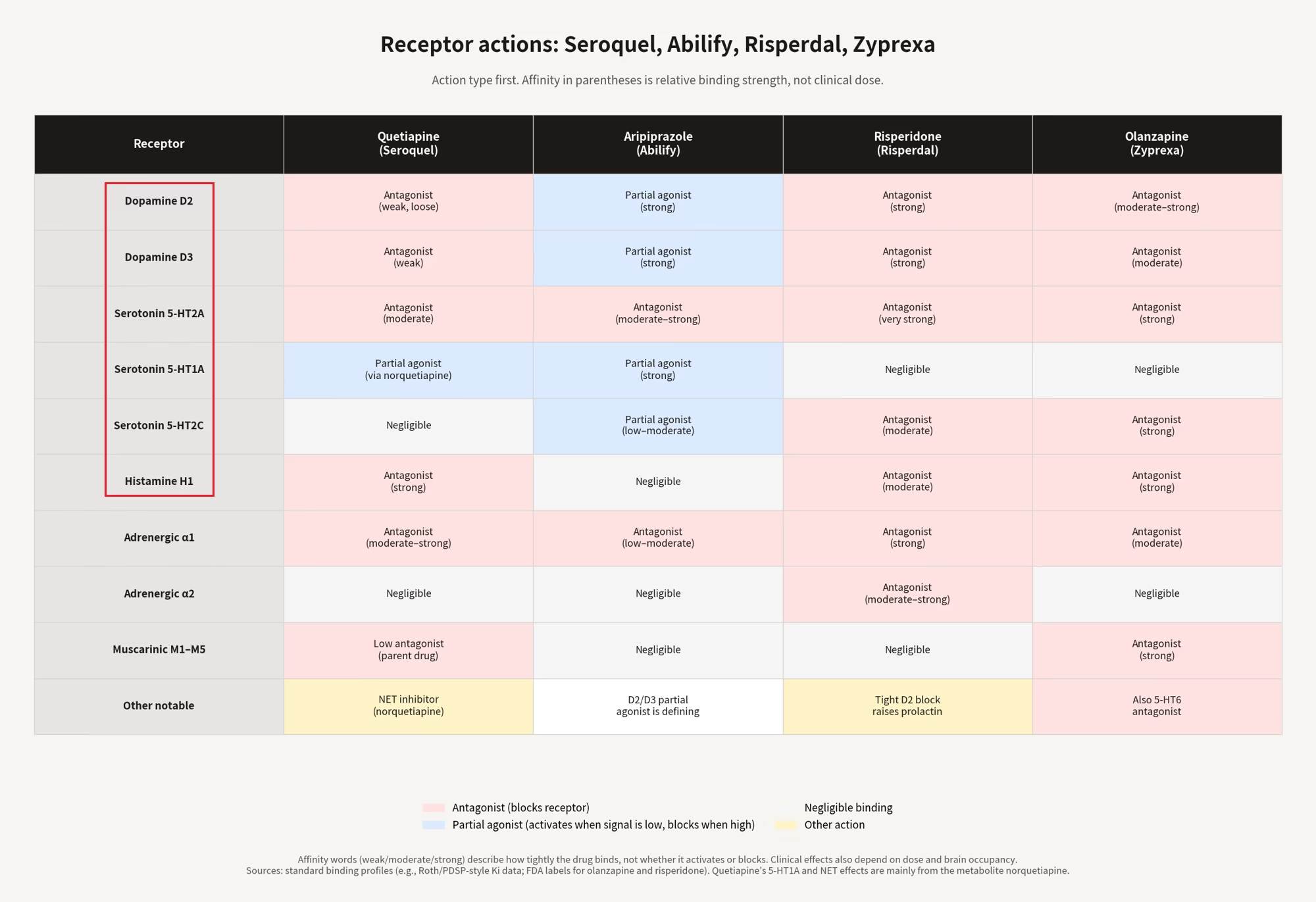
I generated a small antipsychotic chart that accounts for around 70% of the prescriptions written and it's only 4 drugs. You'll notice they hit the same main receptors the SSRI does 5-HT1A/2A/2C and locks out the D2 receptor, plus the H1 to provide sedation. Aside for some tweaks antipsychotics do the same thing as a SSRI, only they are stronger. In this case the eggs are well done, instead of sunny side up.
This also raises some serious questions. If the end result of the drugs are similar. Then what exactly is being treated once you are labelled with schizophrenia, psychosis, depression and/or anxiety? Why does one person have schizophrenia and the other person anxiety? When we can't really differentiate between the two given the treatment is almost the same?
The truth is it doesn't really matter. Tank dopamine activity and slow the brain. The drugs aren't designed to treat. They are designed to silence you. In a crisis it maybe needed. But for day to day anxiety it's overkill.
 TaperCommunity